


City Council Candidates Chat with RCR
Time to cast your ballots, it’s election season! Your locally elected officials have more sway over recreation and transportation initiatives than you might think – don’t underestimate the power of your vote. Our local government holds the gavel to approve or disapprove future projects that impact your access to safe and enjoyable cycling in the Yampa Valley. Because of this, RCR reached out to a lively field of Steamboat Springs City Council candidates for their response to a handful of questions that might help you shape your vote. Ballots will hit your mailbox starting October 10th, so keep an eye out and ROCK THE VOTE on or before November 4th!
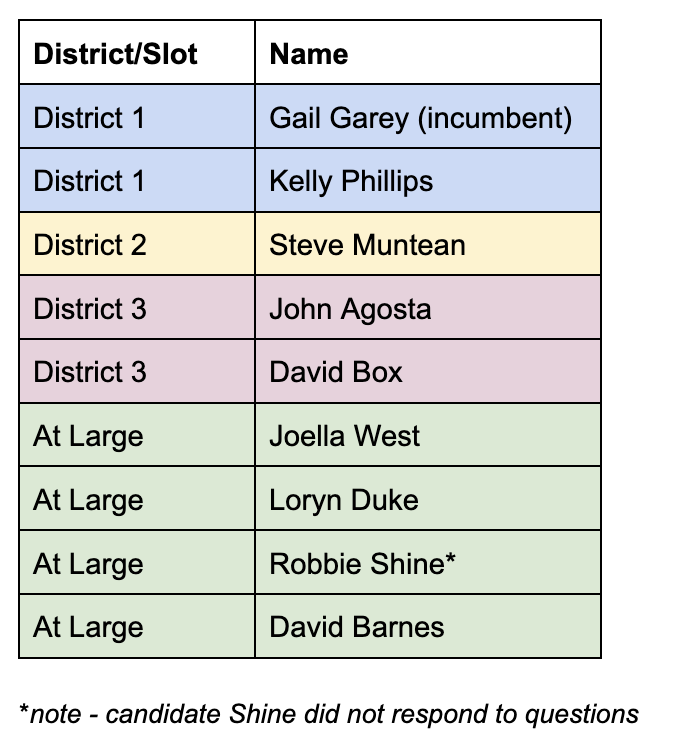
QUESTION 1: There is a lot of talk around town about the positive and negative effects of tourism and recreation. What are some ways you think we are doing well with destination management and what are some areas for potential improvement?
Gail Garey: In Routt County, our quality of life, our economy and our natural environment are all interconnected. Our community is acutely aware of this, and as a result, a significant amount of effort, time and resources are dedicated to finding a balance. The creation of the Routt Recreation and Conservation Roundtable is one example of a positive action that has been taken to bring together stakeholders and to create a forum to discuss new recreation opportunities and how to balance that growth with the preservation of our natural resources and protection of wildlife. The Steamboat Springs Destination Stewardship Action Plan is another example of a positive action that has been taken to “find harmony between resident quality of life and
quality of experience for the visitors…while protecting and supporting our environment, community and cultural heritage.” The Steamboat Springs Chamber’s “Do Steamboat Right” and “Know Before You Go” campaigns have been effective mechanisms for communicating our community’s values to our visitors. Another tangible action has been the installation of the camera at Dry Lake so people know how full the lot is and can make a decision as to whether to go up there or not. Installation of additional cameras at other popular recreation areas would help improve the overall experience. Another opportunity is to expand access to popular trailheads and recreation destinations via public transit and by expanding bike lanes and multi-use trails to
enhance connectivity allowing visitors and residents alike to ditch their vehicles. Continued focus on the management practices outlined in the Destination Stewardship Action Plan is critical to ensure we don’t love to death the natural assets that set this community apart.
Kelly Phillips: I think we are being more selective in the events that we respond to or invite in as a community, Triple Crown comes to mind as an impactful event that destroyed our recreation areas and the guests did not respect our town. The gravel race event would be, for me, a positive event. People are respectful of our town and spend more money. The Town Challenge races, Marathons etc. I would like to see more events like this come into our town.
Steve Muntean: The Chamber, through destination management, has done a good job in educating tourists and making them aware of acting appropriately in our community, in recreational activities and in interacting with wildlife. The Chamber’s focus, from a marketing standpoint, is to increase tourism during the shoulder seasons, not peak summer and winter months. There are opportunities to improve their effectiveness here through an increase in marketing. With over 40% of the city’s revenue generated from tourists, we need to take advantage of shoulder season opportunities to keep our businesses, employees and city revenues healthy.
John Agosta: We’ve done well by investing in trail systems, supporting events, and leveraging 2A funding to expand recreation opportunities that benefit both residents and visitors. Partnerships with groups like Routt County Riders and nonprofits show strong collaboration. A key challenge is that our city relies solely on sales tax, not property tax, for its general fund. More visitors mean more revenue to fund essential services, but also more traffic and crowding. The goal is balance — supporting tourism while investing in transit, connectivity, and management strategies that reduce pressure on our community.
David Box: The conversation about tourism and recreation is at the heart of our community’s identity and future. It’s a dialogue that requires balance, foresight, and a commitment to preserving what makes Steamboat special for both residents and visitors. The Steamboat Springs Chamber, in partnership with the City and other stakeholders, has moved beyond pure destination marketing to a destination stewardship approach with its “Do Steamboat Springs Right” campaign. I support this proactive approach to its marketing which seeks to manage the impacts of tourism. I believe this campaign can further be improved upon by leveraging the lodging association to communicate with visitors about topics including protecting the environment, the trails, and respecting local culture. We must expand our efforts to educate visitors on responsible use of our public lands and the Yampa River. This goes beyond a few signs and needs to include campaigns that address issues like trail etiquette, fire bans, wildlife interaction, and river safety, ensuring that our visitors become stewards, not just consumers, of our natural environment. As a City Council member, I will advocate for policies that prioritize the well-being of our residents while fostering a sustainable and resilient tourism economy. The goal is not to stop tourism, but to manage it in a way that protects our natural assets and preserves the authentic, small-town character that drew and/or keeps us all here.
Joella West: Thanks to the Chamber’s work over the past three years, the endless effort to drag as many people as possible into our community has been on pause. Instead, the focus has been responsible visitor behavior. I have also proposed to the Chamber that we look to attract a higher level demographic that will have more interest in arts and historic preservation. If successful, that would take some of the pressure off our parks and trails.
Loryn Duke: I applaud the Chamber’s approach to destination stewardship and the understanding that tourism and recreation are a vital part of our community, and our economic success. It’s likely that most of us moved here or continue to live here because of the recreational and outdoor opportunities that are unique to Steamboat. It’s important that we protect these assets to preserve our community character and to provide the same recreation accessibility and outlets for future generations. I’m incredibly grateful that our community has organizations such as Routt County Riders, Friends of the Yampa, Yampa Valley Sustainability Council, Steamboat Spring Winter Sports Club, etc that advocate and work to protect our outdoor and tourism recreational assets. Yet, challenges remain and we need to continue and expand efforts to protect our community from overcrowding, economic leakage and environmental degradation. I believe there is an opportunity to collaborate with these organizations, and support their efforts as City Council and continue the work and identify new ways to increase community engagement in decision making, promoting sustainability practices, and the community as a whole to incentivize off-peak travel and increase engagement in decision making.
David Barnes: This seems to be a double edged sword, some years ago the community asked the Chamber to stop the “brutal” marketing, and now there is a renewed call from some businesses to ramp marketing back up. The current Council is considering giving the Chamber more money than they were asking for ahead of the Oct 7th budget meeting. I believe we have robust destination management, and it depends where you sit as to how you see the effects. Personally I believe the summer and shoulder seasons can use the bulk of the effort and dollars. RCR plays a big role in these seasons and should have resources for your marketing. Ski Corp has their own pool of money for marketing, especially winter, and they should be a firm partner with RCR as they stand to benefit from all of your efforts.
QUESTION 2: Recreation and conservation: can the two coexist, and what would that look like?
Gail Garey: Yes, recreation and conservation can coexist and it is essential that they do. Protecting our public lands is an essential component of both recreation and conservation. City Council joined forces with Routt County Commissioners and the Colorado Association of Ski Towns to oppose a provision in the federal Congressional Budget Reconciliation Bill which would have allowed the potential sale of public lands. Based on the community input reflected in the near final Steamboat Springs Community Plan, it is clear that our community values all the outdoor recreation opportunities here in the Valley and is committed to prioritizing resource protection and conservation. As highlighted in the Routt Recreation and Conservation Roundtable’s Conservation and Recreation Strategy there is recognition that population growth, increased visitation, competing land uses and values result in “an increasingly challenging landscape in which to manage and advance the benefits and sustainability of both conservation and recreation.” The Conservation and Recreation Strategy recognizes the connection between conservation, destination management and recreation. It sets forth a framework to evaluate projects, and importantly includes the need to monitor the impacts and measure success. These are all essential components that any entity can utilize to balance recreation and conservation.
Kelly Phillips: I think both can coexist in Steamboat. I don’t know what the collaboration between RCR and Keep Routt Wild looks like but I think both entities have Steamboat’s best interests at heart. We are a small town. I think we can find common ground and bring people together on these issues.
Steve Muntean: Yes, recreation and conservation can coexist. The Mad Rabbit solution is exactly how that can be accomplished. Through the adaptive management plan, the Forest Service and CPW have created a plan that protects animal habitats and elk calving while opening up new trails to better meet increasing demand. The key is working together insuring the preservation, protection and restoration of the natural environment and wildlife while meeting the increasing outdoor demands of our community.
John Agosta: Recreation and conservation are not opposites – they depend on each other. In Routt County, our trails, rivers, and open spaces are part of who we are. With smart policies – like sustainable trail design, seasonal closures, and habitat protections – we can keep these places healthy while welcoming people to enjoy them. Partnering with trail users, ranchers, and conservation groups, like RCR, ensures decisions reflect our shared values and protect the land we all cherish.
David Box: Yes, recreation and conservation not only can coexist, but they must. In our community, they are deeply intertwined – you cannot have one without the other long-term. Recreation fuels our economy and quality of life, while conservation protects the very natural assets—our mountains, trails, rivers, and forests—that make that recreation possible. The coexistence of recreation and conservation looks like a community that understands its prosperity is tied to the health of its natural environment, and acts accordingly through informed policy, respectful behavior, and dedicated investment.
Joella West: I’ll refer again to the Chamber’s Visit Responsibly campaign. But we also have to strike a balance in use by locals. I’ll turn it back to RCR: are there trails that are seriously overused to the detriment of wildlife and/or the forest, and what if any closures would be acceptable to you? You do tremendous work with trail building and maintenance. Are you looking for additional funding or labor from the City?
Loryn Duke: Recreation and conservation can, and should, coexist and are entirely compatible when managed thoughtfully. This is why Steamboat is a special community, as most community members are equally passionate about these two entities and have a clear understanding on the interdependencies. There has already been effective, concerted efforts to align recreation and conservation here, including collaborative trail planning, seasonal closures for wildlife, rigorous environmental studies, ongoing impact monitoring, etc. By prioritizing continued environmental research and integrating conservation messaging into recreational and tourism experiences, I believe we can continue to foster a culture of stewardship that benefits both users and wildlife.
David Barnes: I think they have, and they do. We live in an incredible place and people are passionate, really passionate, about their causes, and healthy robust debates are had and needed. Civility and compromise are key for the two to work together. Our planet is shrinking and the once secret places are no longer secret. Compromise on trail closures, and compromise on trail building and forest accessibility are paramount.
QUESTION 3: How often do you recreate on our local trails, and what is your favorite?
Gail Garey: As an avid outdoor enthusiast, I am out on the local trails 3 to 5 times a week, trail running, hiking, nordic skiing and gravel bike riding. What is my favorite trail? It varies by season. I consider myself lucky to live in such an amazing place which has such abundant outdoor recreation activities.
Kelly Phillips: Spring Creek is my favorite… I can go do the Ditch Loop, hit Spring creek and coast all the way home. I really like that there is a dedicated downhill trail now that separates pedestrians and cyclists, probably the best improvement I have seen in the 30+ years I have been in town.
Steve Muntean: Two or three times a week. My favorite hiking and snowshoeing trails are what we call the “up and over” which runs behind the water treatment plant by Fish Creek, up to between Fish Creek Falls’ lower and upper falls.
John Agosta: I use Routt County’s trails and river resources 80-100 days a year, not including winter recreation. Most of my mileage is on Emerald Mountain and Buff Pass, but my favorite route is the Pioneer-Sunshine loop, connecting down through the Bike Park over to Creekside downhill.
David Box: You will find me on our local trails quite frequently, from Emerald Mountain, to Buffalo Pass, to Rabbit Ears, to Mad Creek and so many more, including the Core Trail. We have an amazing trail network, and it is so hard to select a single favorite. I am a runner, thus some days I want more elevation than others, but if I have to choose – it would have to be the private trail up to Buffalo Pass / Dry Lake that opens just once a year for the Spring Creek Memorial Trail Run. It’s a truly special route that includes plenty of logs to pass over with plenty of elevation gain.
Joella West: Well, age-related health conditions at this point keep me walking only, and entirely on flat ground (insert sad emoji). However, as you know, my son ran the finish shop at Moots for almost 8 years before he devoted his life to bread and pastries, so I thought it worthwhile to check in with him. His current default for convenience is Lupine (he rode it yesterday), but his other top favorite is Nipple Peak.
Loryn Duke: I love biking and hiking on the trails in and around Steamboat. While I wish I took advantage of them more, I am forever grateful for the systems in place and the accessibility right out my door. What I love the most about the trails is the variety and the thoughtful designing to encourage and allow growth for all levels. As my family grows, our biking needs change, and the trails in Steamboat allow for that. When I am riding solo, with friends or my husband my go-to trails are Lupine, Morning Gloria and NPR, Rotary, and, especially this time of year, Flash of Gold. When my daughter was old enough for her first Shotgun ride we went straight to Panorama and the Bluffs. With her Strider and now her peddle Woom, Fiddlehead is the perfect place to play. Sharing my love for the outdoors with my kiddo and watching her confidently bike, take new risks and laugh as she pedals, is my happy place.
David Barnes: My family and I are a family of bikers, while we are not out riding 6 times a week, we enjoy every ride we make, especially this time of the year. Personally I love the Orton meadow trail, MGM, Morning Gloria – and on Buff, Flash Of Gold! Our/your trail system is awesome!
QUESTION 4: Singletrack trails and outdoor recreation in general are a major economic component for Northwest Colorado. How do you see recreational trails impacting our local economy and what could be done to increase this value?
Gail Garey: The outdoor recreation opportunities, the natural beauty of the region and abundant wildlife make Steamboat Springs a popular destination and are the reason many of us live here. They are also an important revenue driver and a major source of employment. Ensuring the quality of the experience remains high not only for our visitors so they want to come back but also for locals is necessary. It is important to create a positive and welcoming environment. This can be done by providing information on the trails, way finding systems for popular trailheads, increasing transit options to trailheads and increasing connectivity. Continuing to provide education on trail etiquette and implementation of the Destination Stewardship Plan are also important components to ensure a high quality user experience. The quality and conditions of the trails is also critical so continued maintenance of existing trails is important. I appreciate all that Routt County Riders do to maintain the trails. Going forward there also needs to be focus on capacity management, partnerships and collaboration between stakeholders to spread visitation across the different seasons and recreation areas.
Kelly Phillips: That’s a great question, I would have to delve into how much marketing is put into singletrack access in Steamboat. I would imagine that would be a question posed to the Chamber? What are your thoughts?
Steve Muntean: Increasing the value of recreational trails is a big challenge, especially given the cutbacks at the federal level. We are going to have to think more creatively about how to balance development with sustainability. In addition to trail development, we will need increased camp access and a much more robust ranger effort. As a result, I believe increasing the value of recreational trails, which will have a positive impact on our economy, will require a concerted team effort from the entire community, as well as the state and hopefully, federal government. This isn’t just a Steamboat issue, but is across all of our mountain towns.
John Agosta: Recreational trails drive our economy by attracting visitors (generating sales tax revenue), supporting local businesses, and improving quality of life. With 2A, lodging tax revenue now funds projects like the proposed Mad Rabbit system, while also providing for trail maintenance. Working with land managers and nonprofits ensures these trails are responsibly designed and approved. To increase their value, we should expand regional connectivity, improve signage and accessibility, and invest in sustainable practices that protect natural resources while strengthening Northwest Colorado’s outdoor economy.
David Box: Recreational trails are a major economic driver for our community. They serve as a key component of our recreation-based economy by attracting visitors and enhancing the quality of life for residents, which helps attract and retain a skilled workforce. This contributes to our future sustainability, making our trails not just a recreational asset, but a vital economic one as well. I believe we have a continued opportunity to increase the infrastructure and connectivity needed to support the biking and running communities alike. We must continue to build and maintain a diverse trail network that offers opportunities for all users, from the paved Core Trail to singletrack trails. A strong focus on connectivity will not only increase the value of existing trails but also disperse use to prevent overcrowding. The collaborative work between professionals and volunteers is critical to the success of our trails. By leveraging their shared expertise and labor, we ensure that new trails are built sustainably and that our existing network remains in top condition.
Joella West: Of course recreational trails have huge value to our residents, some of whom can trace their Steamboat Origin Story to the existence of those trails. Whether visitor or resident (part or full time), “Bike City USA” is a place not just to ride and/or race, but to purchase everything from food to bike gear and bicycles. Could we focus additional resources on child-friendly trails and child-friendly events as an attraction for visitors?
Loryn Duke: Outdoor recreation is a powerhouse for Northwest Colorado’s economy, especially in the heart of Steamboat Springs where we are dependent on sales tax revenue. Our trail systems attract diverse visitors. When visitors come they support local businesses, which keeps our community members employed and drives our local economy. When our local economy thrives, our community has city funding to support the services we need and want to keep Steamboat thriving and special- including investing in workforce housing, childcare, transportation, etc. Specifically for trails, the 2A funding that was set up nearly 40 years ago created the trail systems many of us access every day including Emerald Mountain and Buff Pass, as well as investments that speak to destination management such as seasonal programming, trail entry enhancements, sustainable tourism marketing, etc. The work RCR is doing to maintain, build and advocate for trails in our community is invaluable and as a city council member I will look to work with RCR to continue their efforts.
David Barnes: A big driver of destination Bike Town USA, RCR and the mountain have shown the commitment to expanding recreation opportunities in Steamboat and the County. This recreation also comes in the shoulder seasons when it’s a needed economic impact for local businesses. It is also a double-edged sword as we all know, how many folks can fit in the ‘Boat at one time. That is a question that, as a community, we need to keep asking ourselves. What does this balancing act look like? One thing is for sure I like the biking community and the gravel race a whole lot more than Triple Crown!